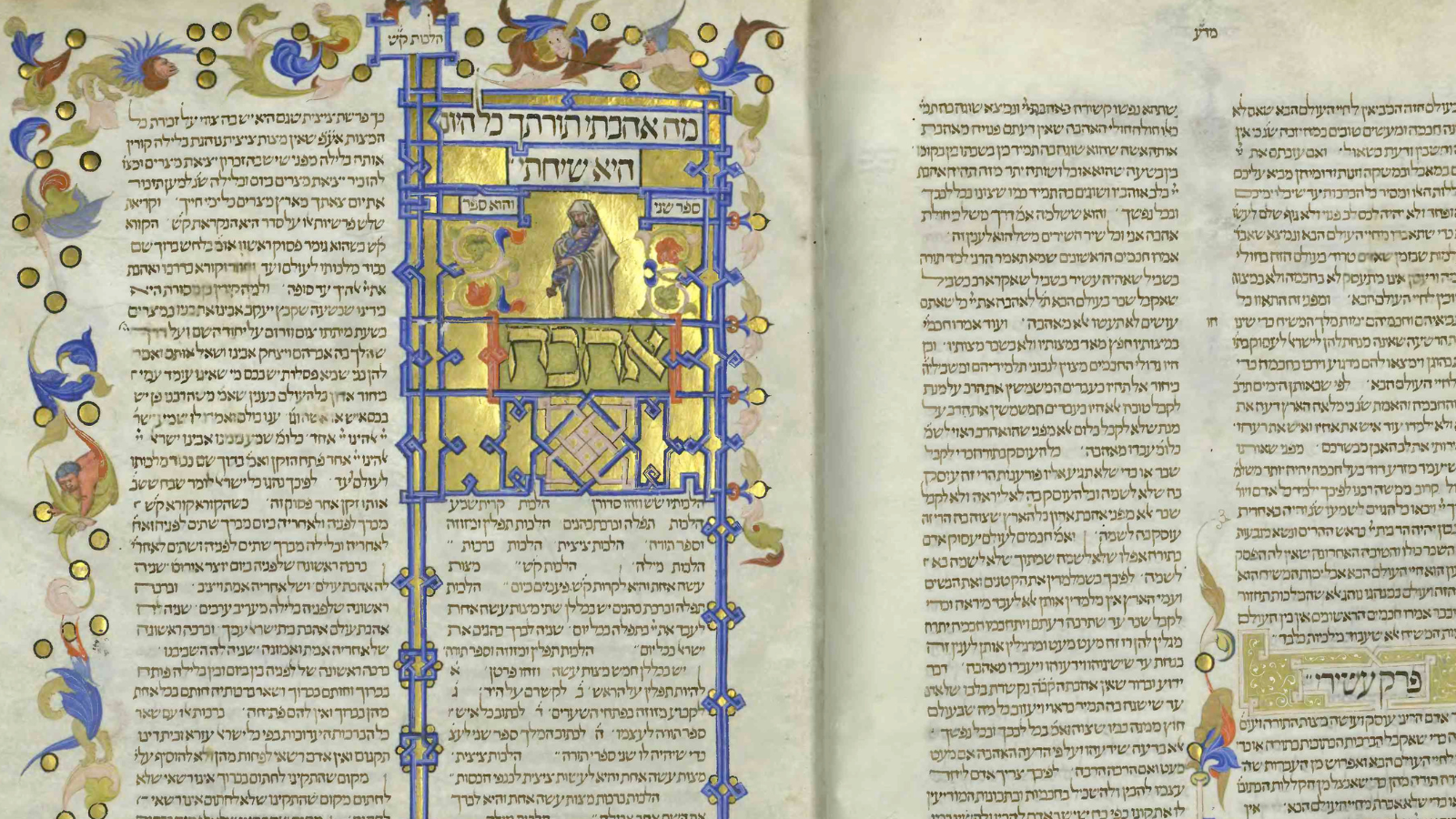
In the Mishneh Torah, “Sefer Ahavah” means “The Book of Love”. It is the second of the 14 books in Maimonides’ encyclopedic work on Jewish law. The title refers to the book’s purpose: to detail the commandments that foster a constant and active love for God. Ahavah includes laws concerning key Jewish practices and rituals. By systematizing these commandments in one book, Maimonides emphasizes that these daily and frequent acts are how a person cultivates and expresses a love for God.
Sefer Ahavah (Book of Love)
- Reading the Shema
- 10/5/25, Chapter 1 – The Shema is, arguably, the most important prayer in Judaism. We recite it twice a day – on wakening and just prior to sleeping. Literally, shema, or sh’ma in pronunciation, means “hear”, but more than that, it is a reminder to ourselves to hear God’s word, and more, to obey and take action in making the world better each day. The prayer is important enough in tradition that it has its own blessings, before and after saying it. Maimonides details the recitation process – timing, blessings, setting – emphasizing just how important it is to pay attention to the details.
- 10/6/25, Chapter 2 – It’s been awhile since “intentionality” reared its head in these readings, and the first time in the Mishneh Torah that it is focal. When reciting the Shema, particularly the first stanza, one must stop what they’re doing, focus, and say it with full intentionality. The remainder can be recited without as much attention. And for some reason, you can’t say the Shema while lying on your back or stomach. You must be standing, sitting, or lying on your side. Obese people are allowed to lie on their back and just shift their weight a bit to one side or the other. The Shema can be said in any language you understand.
- 10/7/25, Chapter 3 – Though it perhaps would be naturally intuitive, that one should only recite the Shema in an “appropriate” place, Maimonides has a particular aversion to anywhere that might involve feces or urine. He starts simply, with a sort of “don’t say the Shema while you’re sitting on the toilet”, but swiftly moves on, enumerating a range of places that might, just possibly, have had one or the other waste products deposited in or around it. If one truly followed his instructions, you’d probably need to only say the Shema in a biologically sterile “clean room” that no one has ever set foot in before.
- 10/8/25, Chapter 4 – Who is exempted from reciting the Shema? Women and children, of course. They can do so, they’re just not required to. Men who are approaching their wedding day, as they are likely too preoccupied with the worry that they may discover, on their wedding night, that their bride is not a virgin. Men who are grieving the loss of a close relative are exempted until after the burial or the next Sabbath day, as their thoughts are not focused. There is some argument over whether a man who is about to or has just had an ejaculation should get ritually purified in a mikveh bath before reciting it. The general consensus is no, that doesn’t exempt him.
- Prayer and the Priestly Blessing
Go forward to Sefer Zemanim