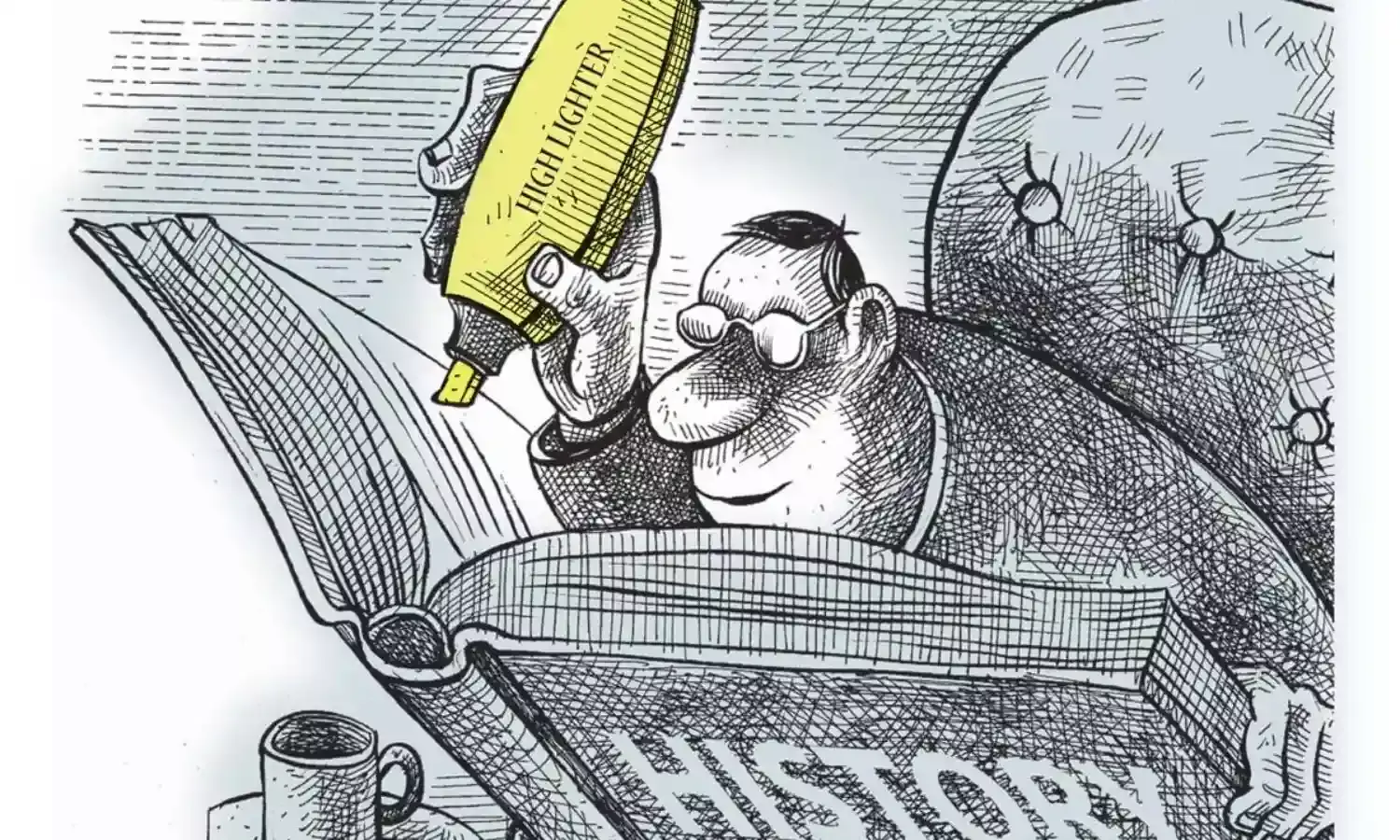
Continuing in the final subdivided book of the Tanakh. I Chronicles dealt with the genealogy of the major historical figures leading to the reign of King David and the focused on his reign itself. II Chronciles picks up with his son, King Solomon, and heads into the politics of the division of the lands into the kingdoms of Israel and Judah. A question that often arises about this period is the historical accuracy of the Chronicles’ version versus other parts of the Tanakh. Historical scholars often assert that it is intended more as a theological overview of the period rather than a historical narrative.
- Solomon has taken over the reign from David. He goes to the site where the altar an Ark are stored and offers up “a thousand sacrifices”. God appears to him, and they have the famous conversation where God asks Solomon what he desires and Solomon asks for the wisdom of leadership. God grants it to him and commends him for not asking for personal wealth and power. Solomon begins to gather the resources to build the Temple, and, well, maybe a modest, or even elaborate, palace for himself.
- Most of this chapter is Solomon thanking several neighboring kings for their support in the building of the Temple, and offering them assistance in the form of workers and materials as they play their part. But there’s an interesting paragraph at the end, where Solomon has a census done of all the foreigners living in the kingdom – 153,600 of them, and puts 70,000 of them to work hauling things, 80,000 working the mines, and 3,600 of them making sure the others do their forced labor. It is not clear whether this is slavery, indentured servitude, or paid work, but it is clear they’re not given a choice.
- Solomon oversees the beginning of the construction of the Temple and its inner sanctum. Detailed descriptions of the materials and dimensions are spelled out in this chapter. I think my favorite is the “chainwork” that drapes around the columns and its one hundred sculpted pomegranates (presumably overlaid with gold, since everything else seems to be) embedded into the chains. Why pomegranates? In Jewish tradition, each fruit contains 613 seeds, the same as the number of mitzvot in the Torah.
- More construction details, focusing on the objects made of gold – the altar, tables, basins, lamps, and more. And somehow, we’re up to four hundred golden pomegranates. Gold, gold, gold! Our current president would have loved this.
- The construction completed, Solomon takes all the riches that David left him and deposits them in the Temple treasury. He issues orders for the Ark to be brought from where it has been stored and placed in the inner sanctuary. A grand celebration is held. Lots of sacrifices are made – sheep and oxen “so numerous that they couldn’t be counted”. God, like anyone, loves a good barbecue, and shows up in the form of a cloud, filling the Temple and forcing everyone out of the building.
- Solomon turns to the people and launches into a long speech – he acknowledges God, the cloud, in the Temple, he talks about his father, David’s, history with God and the rebuilding of the Temple, which he, himself, has just completed. And then he launches into a laundry list of all the things that, over the millennia, God has promised the Jewish people, and calls on him to honor all those promises – the whole chosen people, Israel, protection from enemies, plagues, and pestilence, etc.
- As Solomon finishes his monologue, God, the cloud, bursts into a massive fireball, filling the Temple. Impressed, Solomon and the people proceed, over the next week, to sacrifice another 22,000 oxen and 120,000 sheep. Remember, this is just two pages after they sacrificed oxen and sheep so numerous they couldn’t be counted. That’s a lot of bbq. God appears to Solomon and basically says, “good job on the Temple and the sacrifices – you guys keep your end of the deal, I’ll keep mine – you guys don’t keep your end, and stray from the path, and all bets are off.”
- Twenty years go by during which times Solomon has consolidated his power base, and taken over surrounding lands. Some of them are recovered lands from past times when they belonged to the Israelites, some of them are lands simply being colonized to expand the territory. The non-Jewish inhabitants are conscripted to forced labor. Oh, and one of Solomon’s wives, the daughter of the former Pharaoh, is brought to live outside of Jerusalem, because Solomon declares, wife or not, no non-Jew is going to live in our sacred city. This kind of stuff is part of what the ultra-right in Israel today seize upon to bolster support for their cause.
- The Queen of Sheba visits Solomon and is so impressed with his wisdom and accomplishments that she gives him 120 talents of gold (a talent is roughly 75 pounds), gemstones, rare spices, and more. He, in turn, “gives her things she could only desire” and she leaves thoroughly satisfied. Well then. We then have a long passage about all the things he makes and covers with gold in his palace – between all sources, he’s receiving 666 talents (interesting choice of number there) of gold a year (that’s about 25 tons), so he’s got lots to work with. The chapter ends noting that he ruled for 40 years (1000 tons of gold) and then was buried in the family plot. I find myself wondering where all that gold disappeared to.
- With Solomon dead, one of his sons, Rehoboam, takes over. Many of the people who had fled Israel under Solomon’s yoke, leaving to avoid servitude or other punishments, return, and petition the new king to lighten up. He consults with the elders and the sages, who all advise him to do so and that the people will become loyal to him. But his cadre of young friends urge him in the opposite direction, and in the end, he proclaims that any punishments his father imposed, he’s going to go even further. And, the interesting conclusion, among the Talmudic rabbis, and something I certainly never heard growing up, is that this is the point at which all Israel revolted against the House of David, which continues “to this day” (which would be the time period of the Talmudic rabbis).
- Rehoboam, having been more or less tossed out of Israel and now just reigning over Judah, feels its time to reunite the two, and raises an army of 180,000 to enforce his decision. But God shows up and passes the word that he should focus on just building up the kingdom of Judah and let things take their course over time. So, he does that, following the ways of his father and grandfather (Solomon and David), raises an extended family (18 wives, 60 concubines, 28 sons, 60 daughters), and starts strategically placing his sons and brothers in various places around the region.
- Rehoboam grows even more power hungry over the years and begins to fancy himself above the importance of the Torah. He ceases to follow the traditions. So, God sends the king of Egypt against him, destroying most of what he’s built and looting his treasures. The prophets and priests abandon him. He dies in ignominy and is buried with his ancestors.
- King Jeroboam, who took over for Rehoboam, is ruling over Israel, while King Abijah is ruling over Judah (which means I misread chapter 11, Rehoboam was reigning over Israel, not Judah). They go to war, both wanting to reunite the two halves of the country, but Abijah’s opinion being that Jeroboam’s familial lineage from David has abandoned their faith. With a bit of a godly assist, Abijah’s forces overrun the Israelites, dispatching Jeroboam and reuniting the country under one ruler and restoring the principles of the Torah as the guiding force.
- Abijah’s son, Asa, takes over and continues the restoration of the values of Judaism, following the Torah, and destroying temples dedicated to idols and the like. God gives him a hand too, and his armies successfully rout the Cushites from the region (an area that today would basically be all of Egypt east of the Nile River), looting and pillaging their towns, capturing their domesticated livestock, and then Asa and company return to Jerusalem.
- The prophet Oded is seized by the spirit of God and comes to King Asa and tells him he’s on the right path, God likes what he’s doing, and keep the faith. Asa’s thrilled to hear it and keeps going, bringing back all the traditional rituals, including sacrifices. He restores the wealth to the Temple. He even goes to his mom’s house and destroys all her idolatrous images and statues, which had been there back when she was married to Abijah. Peace reigns… for 35 years….
- Somehow or other, Judah and Israel are still nor fully reunited, and there’s a King Basha in Israel, who decides to… build a wall to prevent the Judeans, under King Asa, from coming in. They’re not sending us their best people seems to be his attitude. Asa takes offense, tears down the wall, and uses the stones and lumber for other purposes. This, apparently, upsets God who sends another seer to inform Asa that he’s not keeping the faith and sticking to the plan. Asa imprisons the seer – shoot the messenger and all that. Within short order, Asa develops a foot ailment and not long after, dies. God is so whimsical in these stories.
- Jehoshaphat, Asa’s son, takes over and spends his reign building up the fortifications of Judah, building the army, and making the country so powerful that no kingdom bordering Judah even considers attacking.
- Jehoshaphat, Judah’s king, and Ahab, Israel’s king, make a pact to attack Ramoth-Gilead (modern day Jordan). First, they consult their various prophets and seers who all tell them they will be victorious. But they also turn to Macaiah, a gloomy, doomsayer. He agrees that the armies will be victorious, but foresees the death of Ahab. They attack, and indeed, they win the battle, but Ahab dies.
- Flushed with success, Jehoshaphat returns to Jerusalem and gets to work on actual governing, starting with appointing various religious officials to oversee the different Israelite tribes’ religious practices, and the general daily life of folk in Judah.
- Several nomadic tribes from east band together to attack Jehoshaphat and the kingdom of Judah in retaliation for what he and Ahab of Israel (who is now gone, replaced by king Ahaziah) did to Ramoth-Gilead. Hearing of the size of the army against him, Jehoshaphat declares a national day of fasting and praying. God responds through a seer that they shouldn’t worry, they should march out, but not engage the advancing army. They do so, and watch as God causes the alliance to break apart and the various nomadic tribes proceed to slaughter each other. Jehoshaphat’s army has nothing to do but loot the corpses and return home. News of this spreads far and wide, and surrounding peoples are in awe of Judah’s God, but not enough to convert, as they continue their own traditions.
- Moving on another generation, Jehoshaphat is now dead and one of his sons, Jehoram, takes over. The first thing he does, to cement his hold on the throne, is execute all his siblings. Then he marries the daughter of King Ahab of Israel, presumably Ahaziah’s sister, and proceeds to reverse all the spiritual returns to the path of God that his father made, going back to idol worship and the like. God sends Elijah, the prophet to tell him that he’s screwed up royally and his kingdom will be destroyed, slowly, over time, and so will his intestines. Yes, his intestines, which, over the next couple of years cause him severe distress until finally “falling out” and killing him.
- The names are starting to get jumbled in my head. Okay, Ahaziah, Israel’s king, is now appointed king over both Israel and Judah. But, as we know, Israel at this point is still not following God’s path, the whole reason for the big Judah vs Israel conflict. So God sends Jehu, I’m not sure where he came from, to start slowly destroying Ahaziah’s family, which, in truth, is being puppet-mastered by Ahaziah’s mom, Ahtaliah. As her various offspring and other relatives are killed, including Ahaziah, she takes over, kills the rest of her relatives, except one kid, Joash, who is secretly spirited away by Ahaziah’s daughter, and safely packed away in hiding in a temple for six years….
- Jehoiada, a senior priest, gathers together all the religious leaders, they march on Jerusalem, take over the palace, has Ahtalaiah put to death, declare the current descendant of David (not named, all that they consider important is the lineage) as king, tear down the idolatrous temples, and renew the covenant with God.
- There it is, we get to the name of the newly appointed king of Judah, Jehoash, or Joash (they seem to be being used interchangeably), a no doubt delightful seven year old, who is not, at all, under the sway of Jehoiada, the chief priest… right. He’s quite faithful to God and as he grows up, decides to renovate the Temple, and proceeds to tax the people to do so. Mixed feelings from all – grumbles and cheers. Meanwhile, Jehoash, or Joash, also used interchangeably, of Israel (and yes, two kings of the same name are ruling the opposing kingdoms, at overlapping times), is the opposite and supports idol worship, blah, blah, blah, and eventually gets “removed” from his throne. Whoever wrote this book really needs an editor to suggest things like, different names for different kings. And stop with all the J names.
- I’ve decided that all these leaders of Judah and Israel were just… stupid. We have all this history of every time that they turn away from God’s path and worship idols, they lose. Yet, time and again, they do the same. Amaziah, now king in Judah, decides to once again march on the Edomites. He makes a pact with Israel, but a prophet tells him to break it, and he does. He and his troops head to Edom, slaughter lots of people, some in particularly brutal ways, then return to Jerusalem and promptly start setting up altars and worshipping the idols of Edom. When asked why, he shrugs it off. Shortly thereafter, God has him chased into exile and executed.
- Uzziah, son of Amaziah, is now king at age 16. They really needed to appoint kings with a little more experience under their belts. Nonetheless, he turns out to be a decent king, and rules for over fifty years, helping return Jerusalem to its former glory, making pacts with neighboring tribes to get along, and keeping on the path of God’s commandments. Until, of course, he decides that he’s above the rules and enters the restricted parts of the Temple to directly commune with God instead of going through the Temple priests. He’s immediately struck with leprosy, and spends his remaining days in shame and illness.
- It’s now Jotham’s turn, we’re back to the Js, he’s the son of Uzziah, last chapter’s leprous king. He has learned from his familial history, and spends his sixteen years as king (from age 16 to 31) faithfully following God’s path, rebuilding the still incomplete upper gates around Jerusalem as well as the surrounding ‘burbs. One might think that that might garner him a decent length story, but apparently whomever wrote Chronicles is more wordy when it comes to the failures. Jotham barely ekes out a hundred-word chapter.
- Ahaz is now king, though it’s not clear if he’s one of Jotham’s sons, or if the lineage has been broken. He hasn’t learned a thing, and from day one of his sixteen year reign (starting at age 22), he throws in with the idol worshippers from surrounding countries, even to the point of looting the Temple and using its riches to create idols to Baal, in particular. He even revives the practice of child sacrifice by fire. God, of course, isn’t happy, and has him repeatedly defeated in battle by the surrounding countries. You know, I’m just not clear on why God keeps choosing the idol worshippers to be the conquerors. It would seem if he wanted to get his point across, he’d have the remaining faithful be the ones who come out on top.
- Finally, someone’s paying attention. Hezekiah becomes king at age 25. His first order of business is to restore Judah onto the path of righteousness. He calls on the priests, the Levites, to re-sanctify the Temple, get rid of all the altars around the country, restore worship services, restore sacrificial offerings, etc. There’s so much to do that the Levites take volunteers from other tribes to help with it all. But it gets done, and things are back on track with the Torah. Hezekiah rules for three decades.
- Well then. Hezekiah gets two chapters. In keeping with the restoration of the faith, he and the Levites declare the return of the annual Pesach celebration. Heralds are sent far and wide to announce it and promise the grace of God if people return to the fath and participate in the nationwide celebrations. Many do, and God heals them and all that good stuff. Back on track!
- Hezekiah’s on a roll, right into a third chapter. Chronicles is loving him. A long discussion of the reinstitution of tithing and burnt offerings, and bit by bit, returning the populace to traditional practices. Is H going to get a fourth chapter? We haven’t hit the usual wrap up of his demise and interment.
- The king of Syria invades Judah. Hezekiah, still in power, gathers all his people together in Jerusalem and prepares for a siege. While the Syrian king sends messages and has heralds call out to all the people in Jerusalem letting them know that they’ll never survive this siege, Hezekiah and the Jewish people pray to God for help. And, help he does, given that they’re back on track. He wipes out the Syrian army (185,000 soldiers). Things back to normal, Hezekiah gets a little full of himself. God slaps him down a bit with a devastating illness. Hezekiah gets it, relents, is cured, and lives out his life and reign. He dies, and his son Manasseh, succeeds him.
- Manasseh’s turn, and in this seeming pendulum back and forth, starting at age twelve, he reverses everything his father Hezekiah did. Leading the people into idol worship, sorcery, divination, building altars to Baal, etc., etc. God decides that Manasseh is the worst of all time, and has the Syrians return, capture him, and take him to prison. There he repents, gets released, returns to Judah, restores everything his dad did, and continues to reign for 55 years. His son Amon takes over at age 22, and in the two short years of his reign, reverses once again everything back to idolatry. His own courtiers assassinate him. They’re all a bit tired of this back and forth.
- This is like watching a high speed ping pong tournament. It’s Josiah’s turn. It’s not clear if he’s directly a descendant of Amon, or just in David’s lineage. He’s eight years old when he becomes king. He realizes even at that tender age that getting right with God is probably a decent idea. He then spends the next eighteen years getting rid of all the idolatry and related stuff in Judah, restoring the Temple, etc., etc. A mystical scroll is found, which reaffirms the Covenant of the Jewish people with God. On the advice of a consulted prophetess, he gets everyone to re-up the Covenant, publicly.
- Josiah declares a return to all the traditional rituals of Pesach, Passover. Festivals, sacrifices, feasting, all the good stuff. All is well in the kingdom of Judah. And then, the king of Egypt decides to march on his enemies the Carchemish, a small kingdom on the border of Syria and Turkey at the time. For some reason, Josiah decides to stick his nose in and marches with troops. The Egyptian king says back off, I have no quarrel with you. Josiah attacks him, and is killed.
- Okay, this is about to get complicated… like it wasn’t already. Jehoahaz, Josiah’s son, becomes king at age 23. But the Egyptian king is still pissed at his father, and captures the throne and deposes him. He puts his own brother, Eliakim (obviously not in David’s lineage) in place as king, renaming him Jehoiakim. He reigns for 11 years, but reinstalls idol worship, etc., etc. For whatever reason, this pisses off the Babylonian king, Nebuchadnezzar, who deposes him, but puts his son, Jehoiachin, an 8 year old, on the throne. But he follows in his father’s footsteps and after a mere 3 months, Nebuchadnezzar replaces him with a Babylonian, Zedekiah, 21 years old. He, too, keeps to the idolatrous path, but Neb allows him to do so for 11 years. God sends the Chaldeans to depose him, and then the Persian king, Cyrus, to declare the rebuilding of Jerusalem and the Temple. And… scene.
Thus ends not just II Chronicles, but the entire Tanakh. Just over three and a half years!
Next up, a return to my started, but paused dive into the Mishneh Torah, the seminal work of the Rambam.